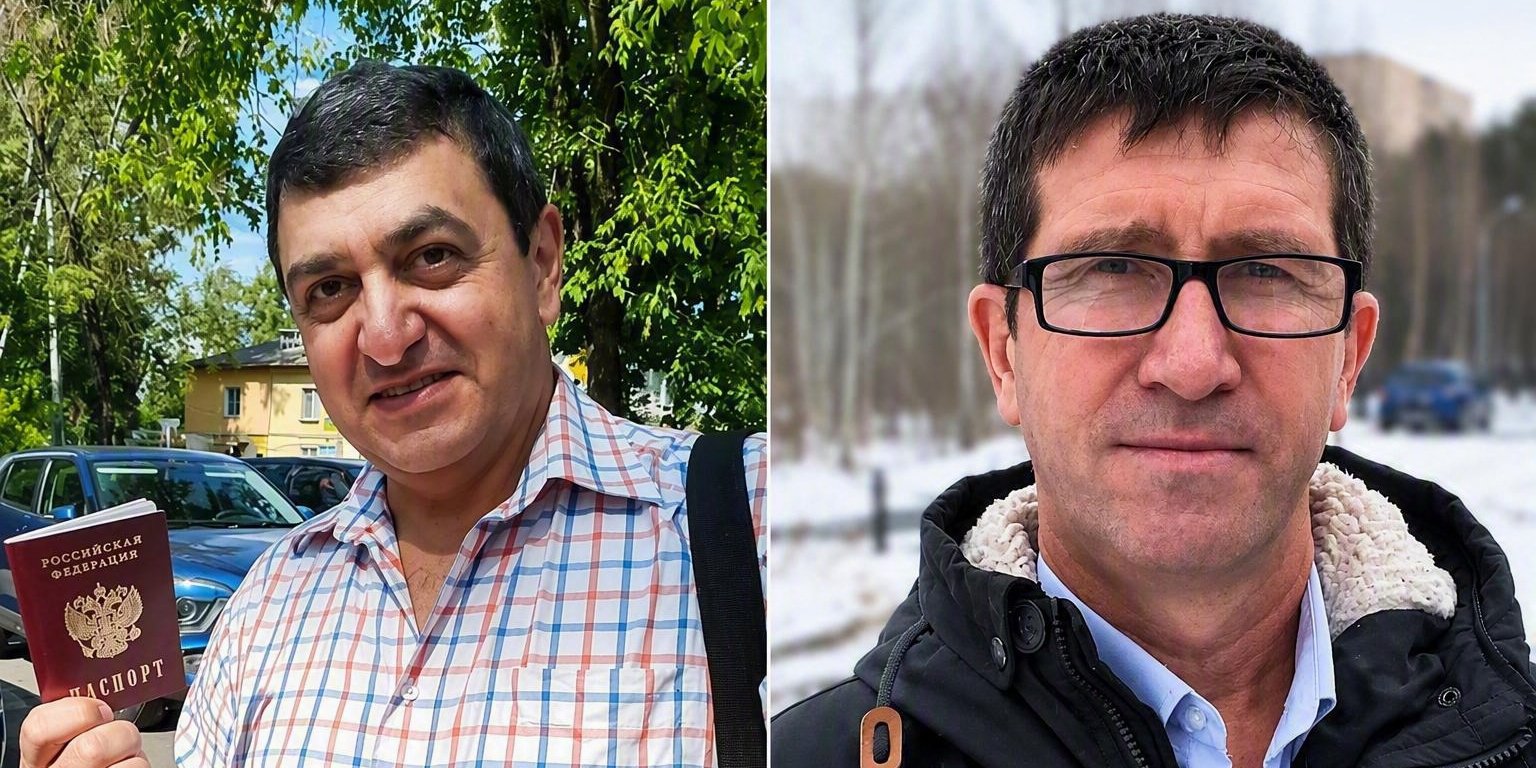
Gevorg Gevorkyan with his new Russian passport. Igor Petrov.
Gevorg Gevorkyan with his new Russian passport. Igor Petrov.
Two Convicted Jehovah's Witnesses Achieve Annulment of Decision to Revoke Citizenship
Nizhegorod Region, Khanty-Mansi Autonomous AreaIn June 2026, within a few days of each other, courts declared unlawful the decisions to revoke the citizenship of two Jehovah's Witnesses who had faced criminal prosecution for their faith. On June 3, the Nizhny Novgorod Regional Court reinstated the rights of Gevorg Gevorkyan, and on June 9, the Court of the Khanty-Mansi Autonomous Area declared the revocation of Igor Petrov's citizenship unlawful.
Gevorg was born in Tkvarcheli (Abkhazia). In August 1992, when an armed conflict began there, Gevorg's family barely made it through checkpoints and reached Adler. Soon Gevorg was issued a refugee certificate, and in April 1995, he was granted Russian citizenship and received a passport. Since then, Gevorg has lived in Nizhny Novgorod. The believer has been married for over 25 years. He works as a truck driver.
Gevorg first faced prosecution for his faith in 2019, when law enforcement officers searched his home and interrogated him. Later, a criminal case was initiated against him. Gevorg was given a 6-year suspended sentence. In December 2024, the Main Directorate of the Ministry of Internal Affairs for the Nizhny Novgorod Region issued a decision to revoke his citizenship.
The ambassador of the Russian Federation to the Republic of Kazakhstan issued the same decision regarding Igor Petrov. This happened in November 2025 — 9 months after the verdict of the Surgut City Court entered into force, under which he was given a 6-year and 5-months suspended sentence. Igor was born in the Chuvash Republic and grew up in Shymkent (Kazakhstan). In 1994, he moved to Surgut. For many years, Igor worked as a carpenter and bricklayer; he now works as a truck driver. Igor has been married to Larisa, a Russian citizen, for over 25 years; the couple have a son.
In the cases of both believers, the courts established that they obtained Russian citizenship through registration under the law, not through naturalization, and concluded that criminal prosecution cannot serve as a legal basis for revoking the Russian citizenship of Gevorkyan and Petrov.
Revoking citizenship is a common way to exert pressure on persecuted Jehovah's Witnesses. Among those who have served sentences for their faith and faced such treatment are Feliks Makhammadiyev, Konstantin Bazhenov, Rustam Seidkuliev, and Rustam Diarov. They were deported after release.


